
Most property management decisions are still made the same way they were twenty years ago. A mix of experience, gut instinct, spreadsheets pulled together at the last minute, and a quick scan of last month’s numbers. That approach can feel comfortable, even earned. The problem is that the environment around property managers has quietly changed, while decision-making habits often have not.
Margins are tighter. Residents are more vocal. Owners expect clearer answers and faster explanations. At the same time, portfolios are more complex than ever, stretching across asset types, markets, and operational models. What used to work well enough now leaves too much money on the table and too many risks unseen.
This is where property management data analytics steps in, not as a buzzword or a shiny tech add-on, but as a practical way to regain control. When done right, analytics replaces guesswork with clarity. It turns scattered information into patterns, and patterns into confident decisions. Not perfect decisions. Just better ones, made earlier, with fewer surprises.
What Is Property Management Data Analytics?
At its core, property management data analytics is the disciplined use of data to understand what is happening across a property portfolio and why it is happening. It is about collecting information from daily operations, financial systems, leasing activity, maintenance logs, and market signals, then analyzing that information to guide decisions. Not once a year, but continuously.
This applies far beyond short-term rentals. Residential communities, multifamily apartments, office buildings, retail centers, and mixed-use portfolios all generate massive amounts of operational data. Rent payments, work orders, leasing velocity, renewal behavior, utility usage, and marketing performance all tell a story. Analytics helps property managers read that story clearly instead of skimming the headlines.
What makes analytics different from traditional reporting is intent. Reports look backward. Analytics looks for meaning. It asks how occupancy trends connect to pricing strategy, how maintenance response times influence resident retention, and how market shifts ripple through cash flow. The goal is not more data, but more insight that can actually be acted on.
For property managers, this means fewer reactive decisions and more deliberate ones. It means understanding performance at the building level, the portfolio level, and the market level without relying on instinct alone. Analytics becomes part of how the business thinks, not just how it reports.
Why Data Analytics Matters Today?
The property management industry has always rewarded experience, but experience alone is no longer enough. Competitive pressure has intensified across nearly every market. New operators enter with leaner models, smarter pricing, and better visibility into performance. Owners notice the difference quickly.
Regulatory scrutiny and resident expectations have also risen. Transparency is no longer optional. Stakeholders want to know not just what happened, but why it happened and what will change next. Data-backed answers build credibility in a way vague explanations never can.
Perhaps the biggest shift is cultural. Many organizations are moving away from decision-making driven by habit or hierarchy and toward decisions supported by evidence. This does not eliminate human judgment. It strengthens it. Data analytics provides a common language that aligns teams across finance, operations, and leasing.
Industry research reflects this momentum. Property management innovation continues to accelerate, supported by a global workforce of nearly two million people and steady investment in technology and analytics tools. What once felt experimental is quickly becoming standard practice for competitive operators.
The move from guesswork to data-driven strategy is not about chasing trends. It is about survival and growth in a market that rewards precision. Analytics helps property managers anticipate issues before they become expensive problems and spot opportunities before competitors do.
Core Concepts and Frameworks
The Data Analytics Lifecycle in Property Management
The analytics lifecycle in property management follows a clear progression: collect, clean, analyze, act, and monitor. Each stage builds on the one before it, and skipping any step weakens the entire effort. Collecting data is about capturing operational, financial, leasing, and maintenance information from across the portfolio. Cleaning that data ensures accuracy, consistency, and trust, which is essential before any insight can be taken seriously.
Analysis is where raw information becomes useful. Trends emerge, relationships become visible, and performance drivers move from assumptions to evidence. Action is the point where analytics proves its value. Pricing decisions change, maintenance schedules adjust, marketing spend shifts, or operational processes are refined. Monitoring closes the loop by tracking whether those actions actually delivered results and whether further adjustment is needed.
This lifecycle is increasingly supported by artificial intelligence, particularly in the analyze and monitor stages. In the 2025 Global Real Estate Technology Survey, 88 percent of investors, owners, and landlords reported piloting AI use cases across property operations, with a strong emphasis on data-related workflows. The takeaway is not that AI replaces human judgment, but that it accelerates pattern recognition and surfaces insights faster than manual review ever could.
What matters most is discipline. The lifecycle works only when it becomes a habit rather than a one-time project. Property managers who embed this process into regular operations move from reacting to issues after they appear to anticipating them earlier, with more confidence and far fewer surprises.
Types of Analytics Explained
Not all analytics answers the same questions. Descriptive analytics explains what happened. Diagnostic analytics explores why it happened. Predictive analytics looks ahead, estimating what is likely to happen next. Prescriptive analytics suggests what actions to take based on those predictions.

Property managers often start with descriptive reporting, such as monthly occupancy or delinquency summaries. Diagnostic analytics goes deeper, linking occupancy changes to pricing, marketing, or maintenance patterns. Predictive models can forecast turnover risk or maintenance failures before they occur. Prescriptive tools help decide the best response, whether that means adjusting rents, reallocating budgets, or scheduling preventive work.
Augmented analytics and machine learning increasingly support these efforts. Rather than replacing human decision-makers, these tools surface insights faster and highlight patterns that might otherwise be missed. The result is not automation for its own sake, but better decision support across the organization.
In recent global surveys, a large majority of investors, owners, and landlords report piloting artificial intelligence use cases across property operations, many focused on data workflows. The message is clear. Analytics is no longer optional for forward-looking property management teams.
Key Metrics Every Property Manager Must Track
Financial and Performance Metrics
Financial metrics are where analytics earns its seat at the table. Occupancy rate, revenue per available unit, net operating income, and rent collection efficiency are not new concepts, but analytics changes how they are understood and used. Instead of reviewing these numbers in isolation at month end, analytics places them in context and shows how they move together over time.
Occupancy tells you how full a property is, but analytics reveals why it is trending up or down. Revenue per available unit shows pricing effectiveness, but only when paired with demand patterns and leasing velocity. Net operating income becomes more than a static figure when broken down by controllable versus structural drivers. Rent collection efficiency, often overlooked, becomes a leading indicator of cash flow stress when analyzed alongside resident behavior.
Research consistently shows that analytics-driven organizations outperform intuition-based decision-making, particularly in forecasting and cash flow planning. Many real estate investors now expect revenue growth to be driven by data rather than instinct. For property managers, this means financial metrics are no longer just reports for owners. They are tools for daily operational guidance.
Tenant and Market Metrics
Resident behavior is one of the most valuable and underused data sources in property management. Turnover rate, renewal timing, satisfaction signals, and early warning signs of churn all leave data trails. Analytics helps connect those signals into a coherent picture.
Turnover is expensive, but analytics reveals patterns that basic reporting misses. Which floor plans churn faster. Which price points trigger non-renewals. Which maintenance issues correlate with early move-outs. Satisfaction metrics, whether from surveys or service interactions, become predictive rather than reactive when analyzed over time.
Market metrics add another layer. Demand shifts, absorption rates, and competitor pricing shape resident decisions long before a notice is given. Analytics helps property managers see how internal performance compares to external conditions, reducing surprises and improving retention strategies.
Operational and Maintenance Metrics
Maintenance data is often treated as a cost center rather than a strategic asset. Analytics flips that perspective. Work order volume, response times, repeat issues, and preventive maintenance adherence all tell a story about asset health and operational efficiency.
Patterns emerge quickly when data is analyzed consistently. Certain systems fail more often during specific seasons. Response delays correlate with negative reviews or renewal declines. Preventive maintenance reduces emergency repairs when scheduled based on actual usage rather than static calendars.
Analytics allows property managers to shift from reactive maintenance to informed planning. Costs become more predictable. Teams become more efficient. Assets last longer. The operational benefits compound quietly but significantly.
Competitive and External Market Signals
No property operates in a vacuum. Local pricing trends, economic indicators, employment data, and neighborhood demand all influence performance. Analytics brings these external signals into the decision-making process.
Tracking competitor pricing alongside occupancy and leasing velocity helps avoid both underpricing and overcorrection. Macroeconomic indicators provide early warnings for demand shifts. Neighborhood-level data highlights emerging opportunities or risks before they show up in financial statements.
When internal and external data are viewed together, property managers gain perspective. Decisions become grounded in reality rather than assumptions about the market.
Real-World Applications and Use Cases
Smart Pricing and Revenue Optimization
Pricing is one of the fastest ways analytics delivers value. Dynamic pricing models use data inputs such as demand, seasonality, unit type, and competitor behavior to recommend optimal rent levels. This does not mean constant price changes. It means informed adjustments based on real signals.
Analytics helps answer practical questions. When to push rents and when to protect occupancy. Which units justify premiums. How concessions impact long-term revenue. The result is pricing discipline supported by evidence rather than guesswork.
Predictive Maintenance and Cost Avoidance
Predictive maintenance uses historical data to anticipate failures before they occur. Maintenance logs, equipment age, usage patterns, and environmental factors feed models that flag risk early.
For property managers, this means fewer emergency repairs and lower long-term costs. Capital planning becomes more accurate. Residents experience fewer disruptions. Predictive insights turn maintenance from a reactive expense into a strategic advantage.
Reducing Vacancy and Enhancing Leasing
Leasing performance improves when analytics guides marketing and outreach. Data reveals which channels attract high-quality residents, which listings convert fastest, and which messaging resonates with specific demographics.
Vacancy reduction becomes a targeted effort rather than a broad push. Leasing teams focus on what works. Marketing budgets are allocated with intention. Time on market shrinks as decisions become sharper.
Tenant Retention and Experience Improvements
Retention is driven by experience, and experience leaves data behind. Service interactions, response times, communication patterns, and amenity usage all influence renewal decisions.
Analytics helps identify residents at risk of leaving before they submit notice. Small interventions, informed by data, can have outsized impact. Retention strategies become proactive and personalized rather than reactive and generic.
Portfolio Growth and Strategic Investment Decisions
At the portfolio level, analytics informs big decisions. When to divest underperforming assets. Where to expand. Which properties are candidates for repositioning.
Performance data across markets highlights strengths and weaknesses. Investment decisions become grounded in evidence rather than optimism. Over time, portfolios become more resilient and more aligned with strategic goals.
Data Tools and Technology Stack
Property Management Software with Analytics Built In
Modern property management platforms increasingly include dashboards and reporting tools. These systems centralize operational data and provide visibility across properties.
The global property management software market continues to grow rapidly, reflecting how essential these platforms have become. Built-in analytics lowers the barrier to entry, making data accessible to teams without specialized expertise.
Integrating Business Intelligence Tools
For deeper analysis, many organizations layer business intelligence tools on top of core systems. Platforms like Power BI, Tableau, and Looker allow custom dashboards, advanced visualizations, and cross-system analysis.
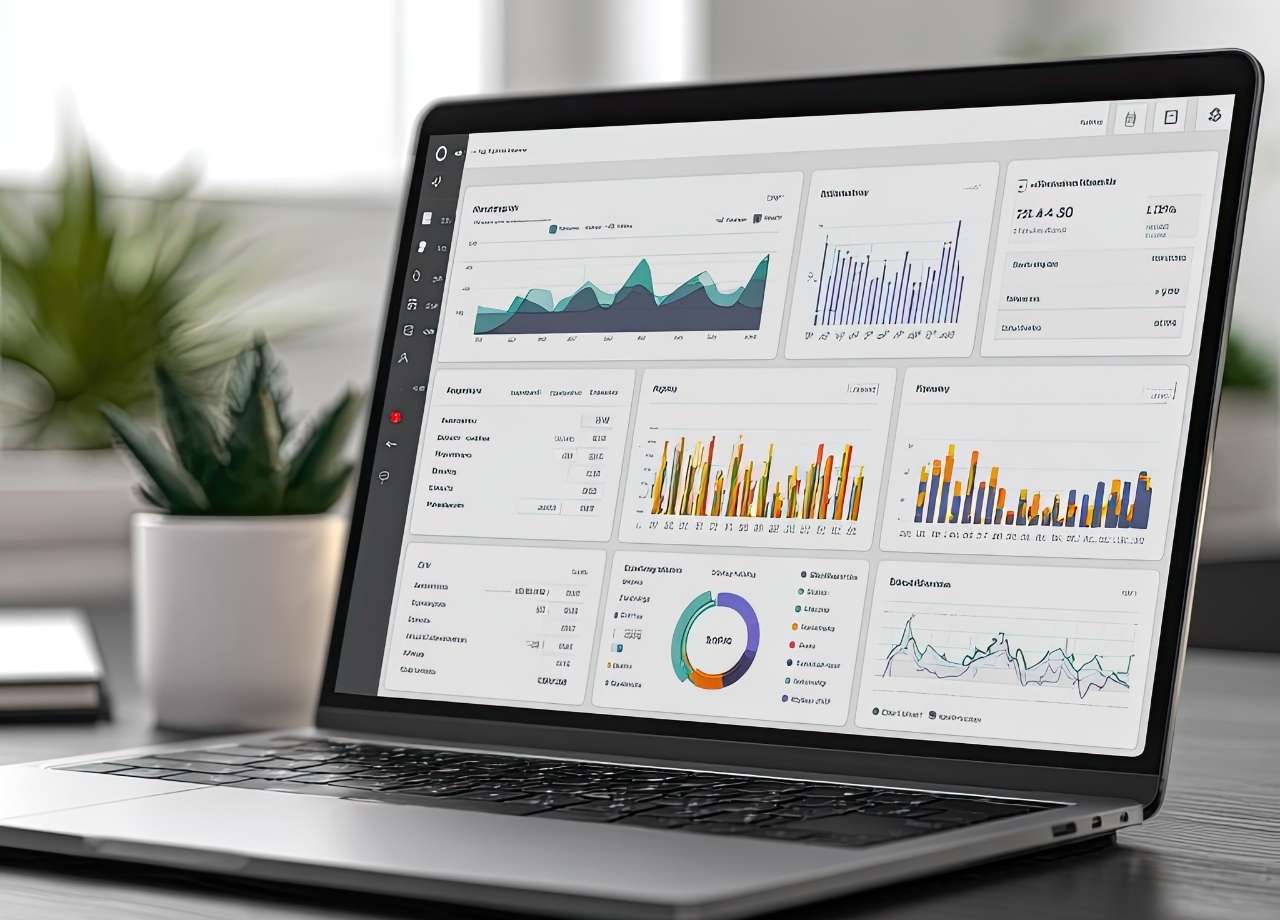
These tools shine when data needs to be explored from multiple angles. Financial, operational, and market data converge, revealing insights that siloed systems cannot.
Predictive Analytics and Machine Learning Platforms
Predictive platforms extend analytics into forecasting and optimization. Use cases include churn prediction, maintenance forecasting, and demand modeling.
Successful implementation starts small. Focus on one high-impact problem. Build trust in the results. Expand gradually as confidence grows.
Geospatial and Market Intelligence Tools
Location matters in property management, and geospatial tools make that visible. Mapping demand, pricing, and demographic trends reveals patterns that spreadsheets hide.
Neighborhood-level insights support smarter pricing, targeted marketing, and informed investment decisions. When geography meets analytics, strategy gains depth.
Getting Started with Analytics, Step by Step
Data Collection and Governance
Every analytics effort begins with data, but not all data is equally useful. Property management teams often assume they need more information when the real issue is consistency. Rent rolls, maintenance logs, leasing activity, and financial records already exist, but they live in different systems and are maintained by different teams with different habits.
Governance brings order to that complexity. It establishes who owns the data, how it is entered, how often it is reviewed, and how errors are corrected. Without this discipline, analytics quickly loses credibility. People stop trusting the numbers, and once trust is gone, adoption stalls.
Privacy and compliance also matter more than many teams expect. Resident information, payment data, and behavioral insights must be handled carefully. Clear policies protect both the organization and the people it serves. Strong governance does not slow analytics down. It makes it sustainable.
Setting KPIs Aligned with Business Goals
Analytics fails most often when it measures everything except what matters. Key performance indicators should reflect real business goals, not just what is easy to track. A goal to improve cash flow demands different metrics than a goal to stabilize occupancy or reduce turnover.
Alignment starts with clarity. What decisions need better support. What outcomes define success. When KPIs connect directly to these questions, analytics becomes relevant to leadership and operations alike.
Too many KPIs dilute focus. A smaller set, reviewed consistently, creates accountability. Over time, these metrics shape behavior across teams, guiding priorities without constant oversight.
Building Dashboards and Alerts
Dashboards are the interface between data and decision-making. A good dashboard tells a story at a glance. It highlights what changed, what matters, and where attention is needed.
The most effective dashboards are role-specific. Executives need high-level trends and exceptions. Property managers need operational signals. Leasing teams need real-time performance feedback. When dashboards respect these differences, adoption increases naturally.
Alerts extend dashboards into daily workflows. They notify teams when thresholds are crossed or patterns shift. Instead of waiting for monthly reviews, issues surface early. Action becomes timely rather than reactive.
Roadmap from Beginner to Intermediate to Advanced Analytics
Most organizations do not start with advanced models, and they should not try to. Beginner analytics focuses on visibility and consistency. Clean data, standardized reports, and basic dashboards establish a foundation.
Intermediate analytics introduces diagnostics and forecasting. Teams begin to ask why performance changes and what is likely to happen next. Cross-functional insights emerge as data sources connect.
Advanced analytics brings optimization and automation. Predictive models guide pricing, maintenance, and retention strategies. Decisions become faster and more precise. Each stage builds on the last, reducing risk and increasing confidence.
Measuring Value and ROI
How Analytics Improves Financial Performance
The financial impact of analytics often shows up quietly. Improved pricing discipline lifts revenue without dramatic changes. Better forecasting reduces budget surprises. Early detection of issues protects net operating income.
Industry benchmarks consistently show that data-driven organizations make better capital allocation decisions. Revenue growth driven by analytics outpaces intuition-based approaches. For property managers, this translates into steadier cash flow and stronger owner confidence.
The return on investment is not limited to one metric. It accumulates across pricing, retention, maintenance, and portfolio strategy.
Operational Efficiency Gains
Operational efficiency is where analytics often delivers its fastest wins. Time spent compiling reports shrinks. Manual processes give way to automated insights. Teams focus on action rather than data preparation.

Maintenance efficiency improves as preventive strategies replace reactive ones. Fewer emergencies mean fewer disruptions and lower costs. Over time, assets operate more smoothly with less friction.
These gains compound. Small time savings across teams add up to meaningful capacity. That capacity can be reinvested in service quality and strategic planning.
Strategic Decision Confidence
Perhaps the most valuable return is confidence. Analytics does not guarantee perfect decisions, but it reduces uncertainty. Leaders can explain choices clearly, supported by evidence rather than intuition.
This confidence changes conversations with owners, investors, and internal teams. Discussions shift from defending outcomes to evaluating options. Trust grows as decisions become more transparent and consistent.
Common Challenges and How to Overcome Them
Data Silos and Integration Issues
Data silos are a legacy of growth and specialization. Leasing, maintenance, finance, and marketing systems evolve independently. Integration feels daunting, but progress does not require perfection.
Start with the systems that matter most to current decisions. Connect them incrementally. Each integration adds value and builds momentum. Over time, silos soften, and insights deepen.
Skill Gaps Between Analysts and Managers
Analytics sits at the intersection of technical and operational expertise. Analysts understand data, while managers understand properties. When these groups operate separately, insights lose relevance.
Bridging the gap requires shared language and collaboration. Training managers to ask better questions and analysts to understand operational realities improves outcomes. Analytics becomes a team sport rather than a specialized function.
Data Accuracy and Bias Prevention
Analytics reflects the data it is built on. Errors, inconsistencies, and bias can distort insights. Regular audits and validation checks protect integrity.
Bias deserves special attention. Historical data may reflect outdated practices or market conditions. Awareness and ongoing review help ensure analytics supports fair and effective decisions.
Scaling Analytics Across a Growing Portfolio
What works for a handful of properties may strain under growth. Scalability requires standardized processes and flexible tools.
Documenting workflows, defining standards, and investing in adaptable platforms prepares analytics to grow with the portfolio. Scaling becomes a managed transition rather than a disruption.
Future Trends in Property Management Analytics
AI and Machine Learning Advances
Artificial intelligence is rapidly moving from pilot projects to core operations. A growing majority of commercial real estate teams are experimenting with AI-driven analytics, reflecting how quickly adoption has accelerated.
Machine learning enhances forecasting, pattern recognition, and optimization. As models mature, they become more accurate and easier to deploy. The focus shifts from experimentation to integration.
IoT and Real-Time Sensor Data for Smart Buildings
Sensors generate real-time data on energy use, occupancy, and equipment performance. This data feeds analytics that supports smarter building operations.
Real-time insights enable immediate responses to issues and longer-term optimization. Buildings become more responsive, efficient, and comfortable for residents.
Blockchain and Secure Data Sharing
Secure data sharing grows in importance as portfolios expand and partnerships multiply. Blockchain offers potential solutions for transparency, auditability, and trust.
While adoption remains early, the technology addresses real challenges around data integrity and access control. Its role in property management analytics will likely expand gradually.
ESG and Sustainability Analytics
Environmental, social, and governance metrics are moving into the mainstream. Energy efficiency, emissions tracking, and social impact increasingly influence investment decisions.
Analytics provides the structure needed to measure and improve ESG performance. What gets measured gets managed, and sustainability becomes actionable rather than aspirational.
Property management data analytics does not arrive fully formed. It develops through steady effort, practical choices, and continuous learning. Organizations that approach it with patience and discipline find that clarity grows over time, decisions improve quietly, and the business feels more controlled and more intentional without ever needing to announce the transformation out loud.