
Pest Control Platform vs. Pest Control Company: What’s the Difference?
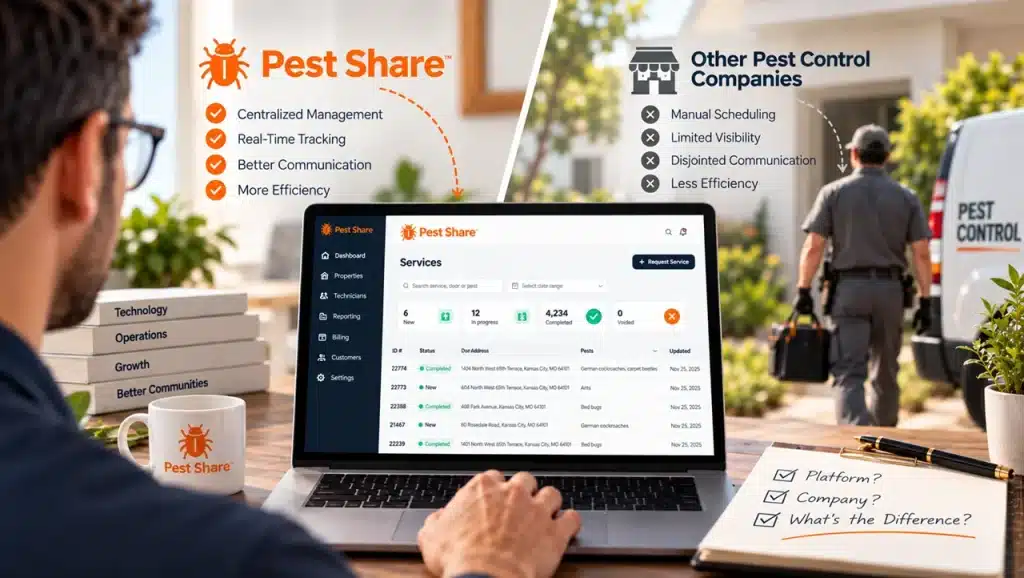
The main difference between a pest control platform and a traditional pest control company is what each one manages. A traditional pest control company performs pest treatments. A pest control platform uses technology to manage the process around those treatments, from resident requests and service coordination to status tracking, documentation, and portfolio-wide visibility. The pest […]
What Is a Pest Control Platform?
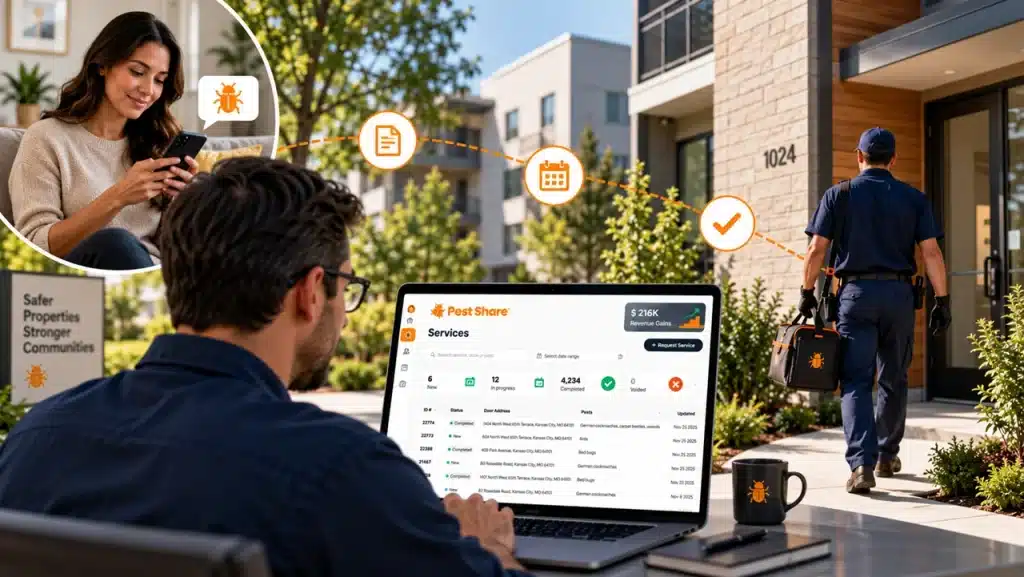
A pest control platform is technology that gives property managers and operators one system to manage pest control across residents, properties, service providers, and markets. Instead of relying on property teams to coordinate residents, vendors, scheduling, service updates, and records manually, an on-demand pest control platform connects those steps into one workflow from resident request […]
Texas Pest Control Laws for Apartment Complex Owners

If your team handles pest complaints the same way they’d log a broken faucet, Texas law can turn that into a much bigger headache. The question everyone searches first — who’s responsible for pest control in a Texas apartment? — sounds simple. But for apartment complex owners, that’s only part of it. The real exposure […]
Noise Complaint Letter for Apartments: A Clear Template and Best Practices for Managers

Most noise complaints do not fail because of bad intentions. They fail because the message is vague, emotional, or easy to ignore. A strong letter does something different. It quietly builds a record while making it clear that the situation is already being tracked. Let’s walk through the templates that actually hold up in real […]
HVAC Maintenance for Apartment Managers: What To Check Before Peak Season Hits
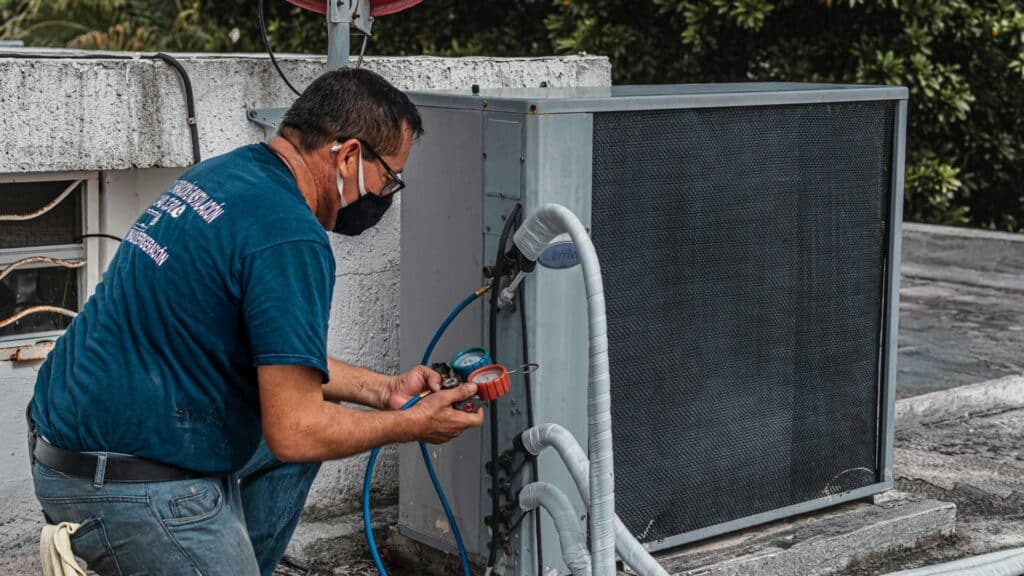
There is a moment every year when HVAC systems stop tolerating shortcuts. It does not happen during a mild day. It happens when demand spikes across the entire property at the same time. Systems that seemed fine suddenly fall behind. Small inefficiencies compound. Weak components fail in clusters, not in isolation. Most teams think they […]
The Renters’ Rebellion: A Data-Driven Autopsy of the 2026 Retention Crisis
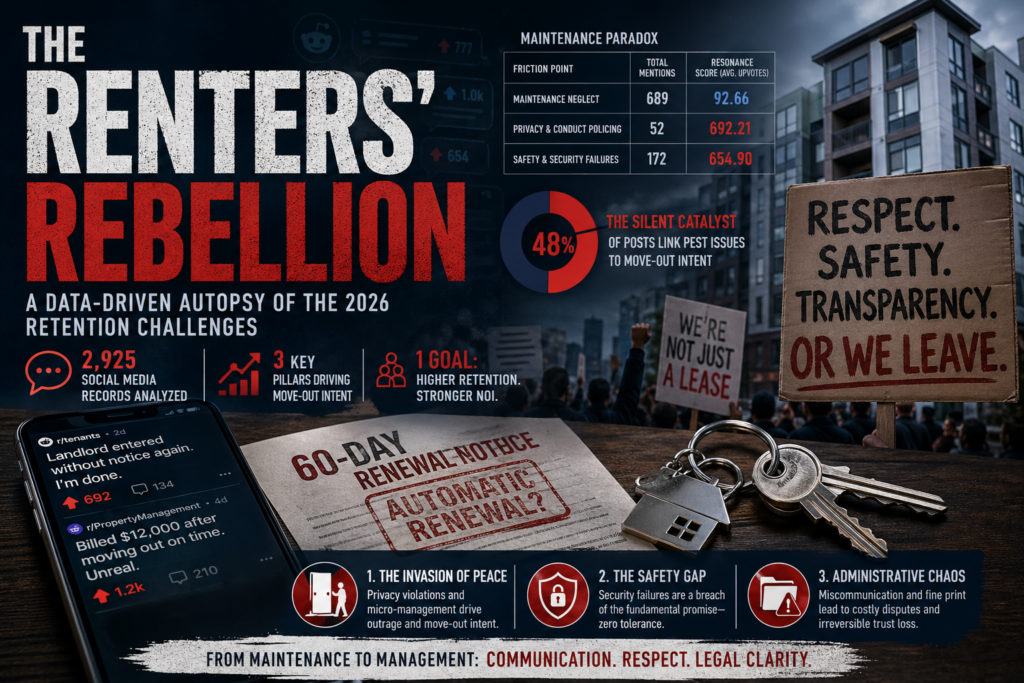
Date: April 2026 Dataset: 2,925 Organic Social Media Records Focus: Resident Retention, Sentiment Analysis, and Move-Out Intent Solving the ‘Black Box’ of Resident Churn For decades, the property management industry has operated on a foundational assumption: If you fix the toilets fast enough, the tenants will stay. This “Maintenance-First” philosophy has dictated budgets, staffing, and […]
Apartment Maintenance Training: How Better Training Improves Service and Response Times

Most maintenance teams don’t have a speed problem. They have a training problem that shows up as a speed problem. Properties that respond within 24 hours have 12% higher tenant retention. That distinction matters. When response times slip, the instinct is to push harder. Add more technicians. Tighten schedules. Ask for urgency. But speed does […]
ADA Parking Requirements for Multifamily Housing: What Property Teams Need To Review

Walk any apartment parking lot and you will see the same pattern. Fresh paint. A few blue signs. Maybe even a van-accessible label or two. On the surface, it looks compliant. On paper, it probably passed a quick internal check. And yet, this is exactly where most properties get into trouble. ADA parking compliance is […]
Resident Communication Tools: How Email, SMS, and Mobile Support Work Together

Most communication problems in apartments are not about effort. They are about structure. Teams are busy. Messages are going out all day. Emails are sent, texts are fired off, app notifications exist somewhere in the background. Yet residents still say the same thing. “No one told me.” Or worse, “I told you already.” That gap […]
Resident Engagement Strategy: How To Create Ongoing Connection in Apartment Communities

Walk into almost any apartment office and ask how engagement is going, and you will hear a familiar answer. “We do events.” That answer sounds fine on the surface. It is also the exact reason most communities struggle with participation, weak connections, and unpredictable renewals. Events are not a system. They are moments. And moments, […]