Date: April 2026
Dataset: 2,925 Organic Social Media Records
Focus: Resident Retention, Sentiment Analysis, and Move-Out Intent
Solving the ‘Black Box’ of Resident Churn
For decades, the property management industry has operated on a foundational assumption: If you fix the toilets fast enough, the tenants will stay. This “Maintenance-First” philosophy has dictated budgets, staffing, and software purchases across the globe.
But in 2026, the data tells a different, much more unsettling story.
While property managers look at their internal ticketing systems to measure “success,” residents are going elsewhere to speak their truth. They are gathering on digital forums like Reddit to discuss the moments they decided to leave. We analyzed nearly 3,000 interactions to understand why residents who were “planning to renew” suddenly chose the “Nuclear Option”, moving out.
Chapter 1: The Methodology – How We Quantified Human Outrage
To make this research “solid,” we used an AI-driven Natural Language Processing (NLP) model to categorize 2,925 individual posts and comments from major renter communities.
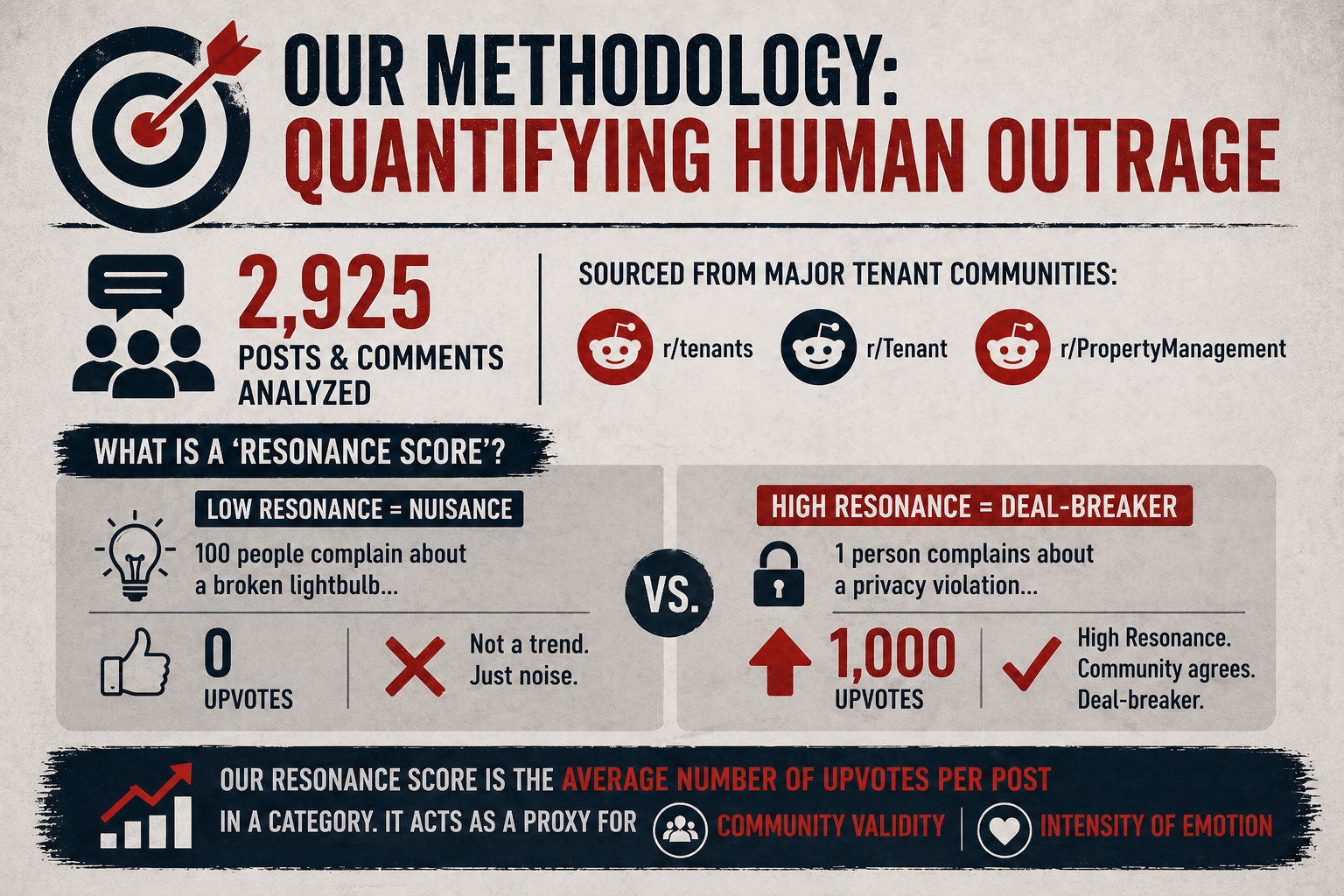
What is a ‘Resonance Score’?
A simple count of complaints is misleading. Our Resonance Score is the average number of upvotes per post in a category. It acts as a proxy for “Community Validity”, essentially measuring how many other renters say, “Me too, and this is why I left.”
Chapter 2: The Maintenance Paradox (Volume vs. Intensity)
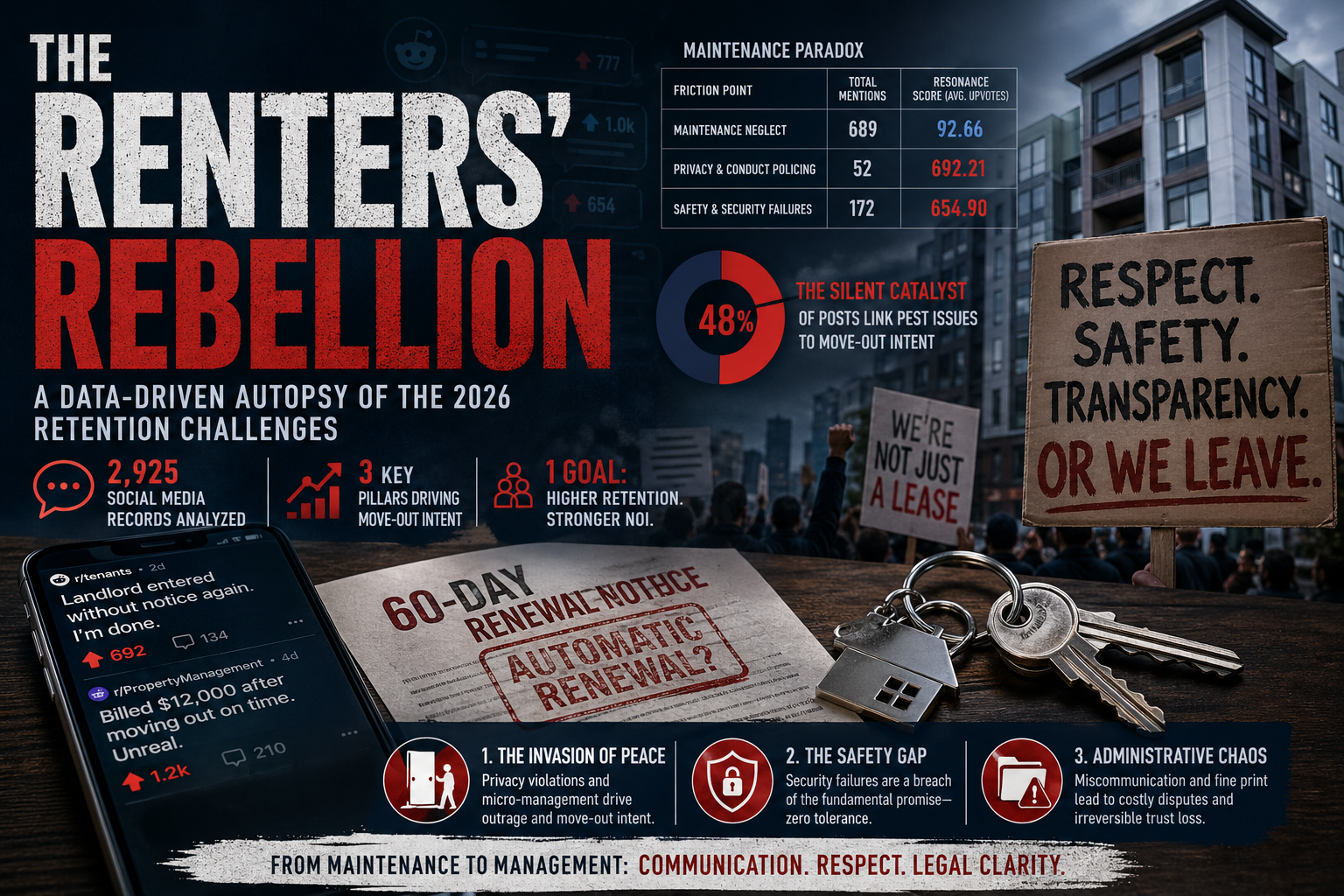
The most striking discovery of this report is the Maintenance Paradox. The issues that happen most often (Volume) are actually the least likely to cause a viral move-out threat (Intensity). However, they create a “Habitability Trap” that makes the property vulnerable to legal escalations.
| Friction Point | Prevalence in Data |
Resonance Score
|
|---|---|---|
| Pests & Sanitation (The Catalyst) | 48.0% | 145.60 |
| Privacy & Conduct Policing | 1.8% | 692.21 |
| Safety & Security Failures | 5.9% | 654.90 |
Chapter 3: The ‘Silent Catalyst’ – Why Pests are the Final Straw
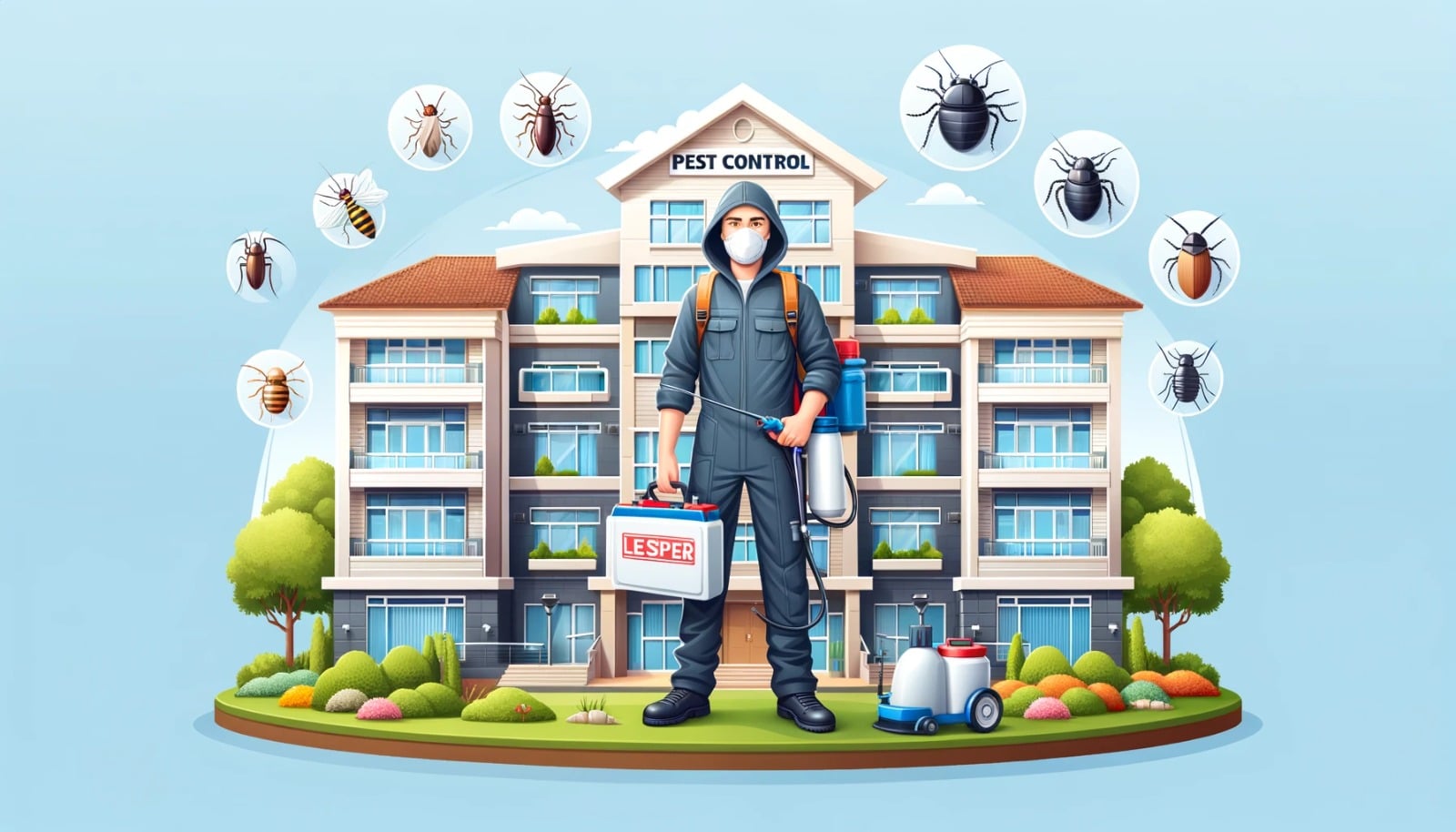
While Privacy and Safety violations act as “instant kills” for retention, Pests and Sanitation issues act as the primary catalyst for the “Final Straw” narrative. In nearly 48% of the total dataset, pest-related keywords appeared alongside move-out intent.
The Data-Backed Narrative: Pests are rarely an isolated complaint. Instead, they appear in “escalation chains.” A resident encounters a pest issue; they report it; the management responds slowly or dismissively; the resident then begins looking for other reasons to leave. Because pests affect the legal definition of “Habitability,” they are the most common tool residents use to justify breaking a lease without penalty.
Chapter 4: The Pillars of the ‘Nuclear Option’
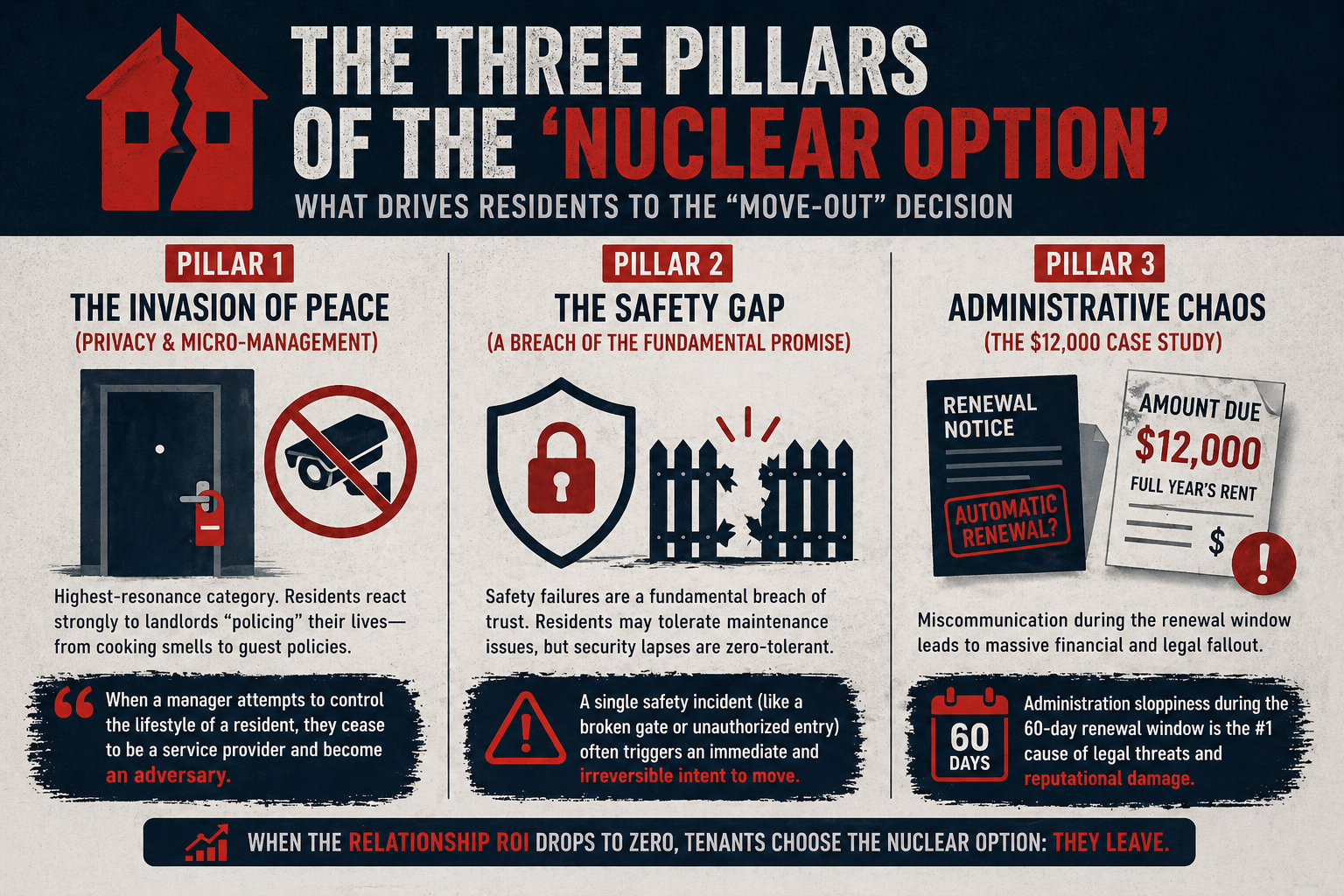
Pillar 1: The Invasion of Peace (Privacy & Micro-Management)
This was the highest-resonance category. When a landlord attempts to control the lifestyle of a resident (e.g., cooking smells, guests), they cease to be a service provider and become an adversary.
Pillar 2: The Safety Gap
Residents are zero-tolerant of security lapses. A single safety incident (like a broken gate) often results in an immediate and irreversible intent to move.
Pillar 3: Administrative Chaos (The $12,000 Case Study)
We identified a resident billed $12,000 due to an “automatic renewal” misunderstanding. Administrative sloppiness during the 60-day renewal window is the #1 cause of legal threats and reputational damage.
Chapter 5: Strategic Roadmap for 2026
- Eliminate the ‘Habitability Catalyst’: Since pests appear in nearly 50% of complaints, proactive pest management isn’t just about bugs—it’s about removing the resident’s primary legal lever for lease termination.
- Prioritize ‘Psychological Safety’: Audit staff entry protocols. Unannounced entry is 7x more likely to cost a renewal than a maintenance delay.
- The ‘No-Surprise’ Renewal Window: Start transparency checks at 90 days. Avoiding the “Administrative Chaos” identified in our $12k case study will save more in vacancy costs than any other action.
The 2026 Renter is looking for a place where their privacy is respected, their habitability is guaranteed, and their administrative interactions are transparent. The future of retention lies in Communication, Respect, and proactive Habitability management.